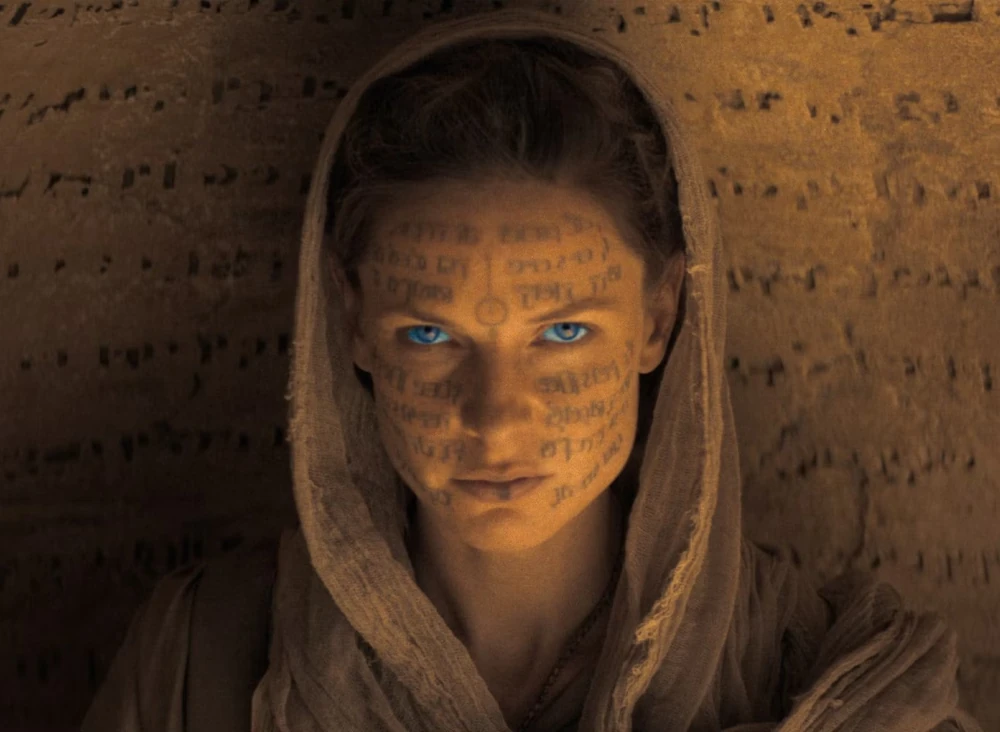
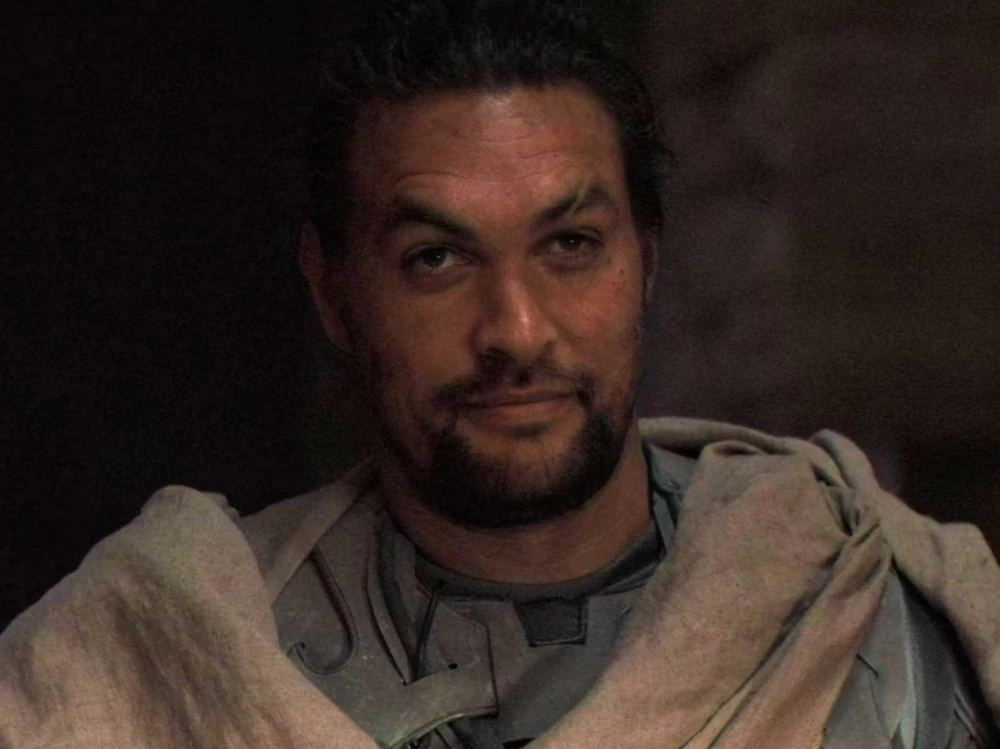
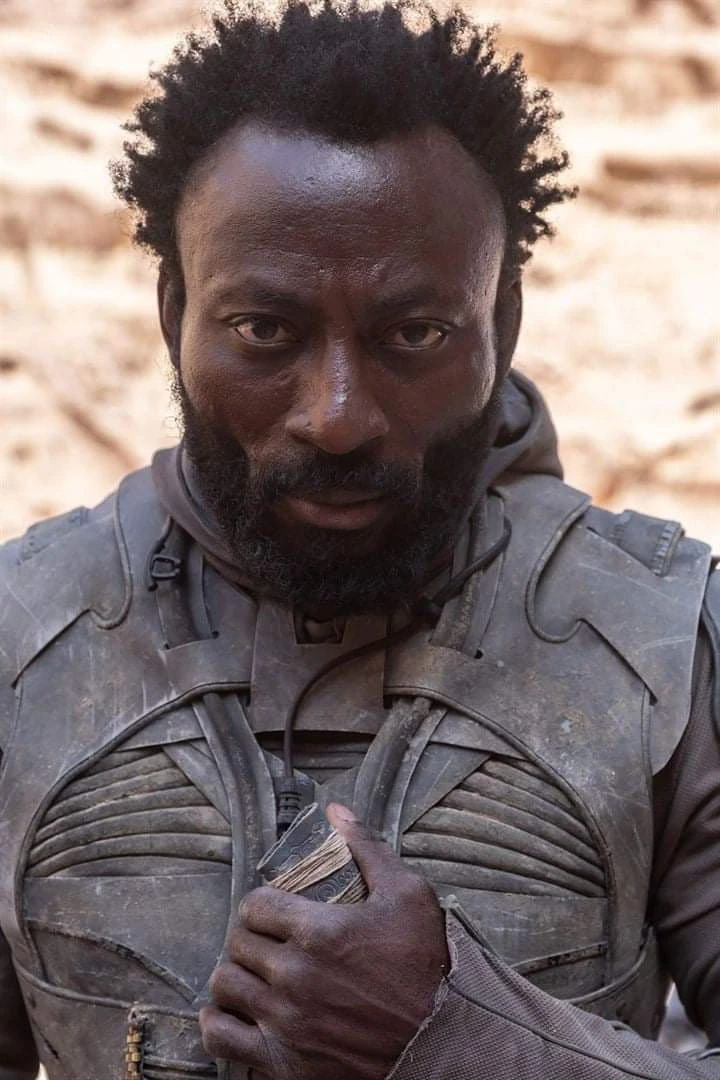
Hamburger Icon

DUNE

Intro to dune

Dune is a 1965 epic science fiction novel by American author Frank Herbert, originally published as two separate serials (1963-64 novel 'Dune World' and 1965 novel 'Prophet of Dune') in Analog magazine. It tied with Roger Zelazny's This Immortal for the Hugo Award for Best Novel and won the inaugural Nebula Award for Best Novel in 1966. It is the first installment of the Dune Chronicles. It is one of the world's best-selling science fiction novels.

Dune is set in the distant future in a feudal interstellar society in which various noble houses control planetary fiefs. It tells the story of young Paul Atreides, whose family accepts the stewardship of the planet Arrakis. While the planet is an inhospitable and sparsely populated desert wasteland, it is the only source of melange, or "spice", a drug that extends life and enhances mental abilities. Melange is also necessary for space navigation, which requires a kind of multidimensional awareness and foresight that only the drug provides. As melange can only be produced on Arrakis, control of the planet is a coveted and dangerous undertaking. The story explores the multilayered interactions of politics, religion, ecology, technology, and human emotion as the factions of the empire confront each other in a struggle for the control of Arrakis and its spice.

Herbert wrote five sequels: Dune Messiah, Children of Dune, God Emperor of Dune, Heretics of Dune, and Chapterhouse: Dune. Following Herbert's death in 1986, his son Brian Herbert and author Kevin J. Anderson continued the series in over a dozen additional novels since 1999.

Adaptations of the novel to cinema have been notoriously difficult and complicated. In the 1970s, cult filmmaker Alejandro Jodorowsky attempted to make a film based on the novel. After three years of development, the project was canceled due to a constantly growing budget. In 1984, a film adaptation directed by David Lynch was released to mostly negative responses from critics and failure at the box office, although it later developed a cult following. The book was also adapted into the 2000 Sci-Fi Channel miniseries Frank Herbert's Dune and its 2003 sequel, Frank Herbert's Children of Dune (the latter of which combines the events of Dune Messiah and Children of Dune). A second film adaptation, directed by Denis Villeneuve, was released on October 21, 2021, to positive reviews. It grossed $434 million worldwide and went on to be nominated for ten Academy Awards, including Best Picture, ultimately winning six. Villeneuve's film covers roughly the first half of the original novel; a sequel, which covers the second half of the story, was released on March 1, 2024, to critical acclaim.

The series has also been used as the basis for several board, role-playing, and video games.

Since 2009, the names of planets from the Dune novels have been adopted for the real-life nomenclature of plains and other features on Saturn's moon Titan.

LEARN MORE

CLOSE

Hero Image

Origin OF DUNE

After his novel The Dragon in the Sea was published in 1957, Herbert traveled to Florence, Oregon, at the north end of the Oregon Dunes. Here, the United States Department of Agriculture was attempting to use poverty grasses to stabilize the sand dunes. Herbert claimed in a letter to his literary agent, Lurton Blassingame, that the moving dunes could "swallow whole cities, lakes, rivers, highways." Herbert's article on the dunes, "They Stopped the Moving Sands", was never completed (and only published decades later in The Road to Dune), but its research sparked Herbert's interest in ecology and deserts.

Herbert further drew inspiration from Native American mentors like "Indian Henry" (as Herbert referred to the man to his son; likely a Henry Martin of the Hoh tribe) and Howard Hansen. Both Martin and Hansen grew up on the Quileute reservation near Herbert's hometown. According to historian Daniel Immerwahr, Hansen regularly shared his writing with Herbert. "White men are eating the earth," Hansen told Herbert in 1958, after sharing a piece on the effect of logging on the Quileute reservation. "They're gonna turn this whole planet into a wasteland, just like North Africa." The world could become a "big dune," Herbert responded in agreement.

Herbert was also interested in the idea of the superhero mystique and messiahs. He believed that feudalism was a natural condition humans fell into, where some led and others gave up the responsibility of making decisions and just followed orders. He found that desert environments have historically given birth to several major religions with messianic impulses. He decided to join his interests together so he could play religious and ecological ideas against each other. In addition, he was influenced by the story of T. E. Lawrence and the "messianic overtones" in Lawrence's involvement in the Arab Revolt during World War I. In an early version of Dune, the hero was actually very similar to Lawrence of Arabia, but Herbert decided the plot was too straightforward and added more layers to his story.

Herbert drew heavy inspiration also from Lesley Blanch's The Sabres of Paradise (1960), a narrative history recounting a mid-19th century conflict in the Caucasus between rugged caucasian Muslim tribes and the expanding Russian Empire.[7] Language used on both sides of that conflict become terms in Herbert's world—chakobsa, a Caucasian hunting language, becomes a battle language of humans spread across the galaxy; kanly, a word for blood feud in the 19th century Caucasus, represents a feud between Dune's noble Houses; sietch and tabir are both words for camp borrowed from Ukrainian Cossacks (of the Pontic–Caspian steppe).

Herbert also borrowed some lines which Blanch stated were Caucasian proverbs. "To kill with the point lacked artistry", used by Blanch to describe the Caucasus peoples' love of swordsmanship, becomes in Dune "Killing with the tip lacks artistry", a piece of advice given to a young Paul during his training. "Polish comes from the city, wisdom from the hills", a Caucasian aphorism, turns into a desert expression: "Polish comes from the cities, wisdom from the desert".

Another significant source of inspiration for Dune was Herbert's experiences with psilocybin and his hobby of cultivating mushrooms, according to mycologist Paul Stamets's account of meeting Herbert in the 1980s:

Frank went on to tell me that much of the premise of Dune—the magic spice (spores) that allowed the bending of space (tripping), the giant sand worms (maggots digesting mushrooms), the eyes of the Fremen (the cerulean blue of Psilocybe mushrooms), the mysticism of the female spiritual warriors, the Bene Gesserits (influenced by the tales of Maria Sabina and the sacred mushroom cults of Mexico)—came from his perception of the fungal life cycle, and his imagination was stimulated through his experiences with the use of magic mushrooms.

Herbert spent the next five years researching, writing, and revising. He published a three-part serial Dune World in the monthly Analog, from December 1963 to February 1964. The serial was accompanied by several illustrations that were not published again. After an interval of a year, he published the much slower-paced five-part The Prophet of Dune in the January–May 1965 issues. The first serial became "Book One: Dune" in the final published Dune novel, and the second serial was divided into "Book Two: Muad'dib" and "Book Three: The Prophet". The serialized version was expanded, reworked, and submitted to more than twenty publishers, each of whom rejected it. The novel, Dune, was finally accepted and published in August 1965 by Chilton Books, a printing house better known for publishing auto repair manuals. Sterling Lanier, an editor at Chilton, had seen Herbert's manuscript and had urged his company to take a risk in publishing the book. However, the first printing, priced at $5.95 (equivalent to $57.53 in 2023), did not sell well and was poorly received by critics as being atypical of science fiction at the time. Chilton considered the publication of Dune a write-off and Lanier was fired. Over the course of time, the book gained critical acclaim, and its popularity spread by word-of-mouth to allow Herbert to start working full time on developing the sequels to Dune, elements of which were already written alongside Dune.

At first Herbert considered using Mars as setting for his novel, but eventually decided to use a fictional planet instead. His son Brian said that "Readers would have too many preconceived ideas about that planet, due to the number of stories that had been written about it."

Herbert dedicated his work "to the people whose labors go beyond ideas into the realm of 'real materials'—to the dry-land ecologists, wherever they may be, in whatever time they work, this effort at prediction is dedicated in humility and admiration."

LEARN MORE

CLOSE

Hero Image

Duke Leto Atreides of House Atreides, ruler of the ocean world Caladan, is assigned by the Padishah Emperor Shaddam IV to serve as fief ruler of the planet Arrakis. Although Arrakis is a harsh and inhospitable desert planet, it is of enormous importance because it is the only planetary source of melange, or the "spice", a unique and incredibly valuable substance that extends human youth, vitality and lifespan. It is also through the consumption of spice that Spacing Guild Navigators are able to effect safe interstellar travel. Shaddam, jealous of Duke Leto Atreides's rising popularity in the Landsraad, sees House Atreides as a potential future rival and threat, so conspires with House Harkonnen, the former stewards of Arrakis and the longstanding enemies of House Atreides, to destroy Leto and his family after their arrival. Leto is aware his assignment is a trap of some kind, but is compelled to obey the Emperor's orders anyway.

Leto's concubine Lady Jessica is an acolyte of the Bene Gesserit, an exclusively female group that pursues mysterious political aims and wields seemingly superhuman physical and mental abilities, such as the ability to control their bodies down to the cellular level, and also decide the sex of their children. Though Jessica was instructed by the Bene Gesserit to bear a daughter as part of their breeding program, out of love for Leto she bore a son, Paul. From a young age, Paul is trained in warfare by Leto's aides, the elite soldiers Duncan Idaho and Gurney Halleck. Thufir Hawat, the Duke's Mentat (human computers, able to store vast amounts of data and perform advanced calculations on demand), has instructed Paul in the ways of political intrigue. Jessica has also trained her son in Bene Gesserit disciplines.

Paul's prophetic dreams interest Jessica's superior, the Reverend Mother Gaius Helen Mohiam. She subjects Paul to a deadly test. This involves her holding a poisoned needle (the gom jabbar) to his neck, ready to strike should he withdraw his hand from a box which creates extreme pain by nerve induction but causes no physical damage. This is to test Paul's ability to endure the pain so as not to die on the tip of the needle; to confirm that his human strengths can overcome his animal instincts. Paul passes by enduring greater pain than any woman who has ever been subjected to the test.

Leto, Jessica, and Paul travel with their household to occupy Arrakeen, the capital on Arrakis formerly held by House Harkonnen. Leto learns of the dangers involved in harvesting the spice, which is protected by giant sandworms, and seeks to negotiate with the planet's indigenous Fremen people, seeing them as a valuable ally rather than foes. Soon after the Atreides' arrival, Harkonnen forces attack, joined by the Emperor's ferocious Sardaukar troops in disguise. Leto is betrayed by his personal physician, the Suk doctor Wellington Yueh, who delivers a drugged Leto to the Baron Vladimir Harkonnen and his twisted Mentat, Piter De Vries. Yueh, who performed the kidnapping of Leto under duress, arranges for Jessica and Paul to escape into the desert, where they are presumed dead by the Harkonnens. Yueh replaces one of Leto's teeth with a poison gas capsule, hoping Leto can kill the Baron during their encounter. The Baron narrowly avoids the gas (due to his shield), which kills Leto, Piter, and the others in the room. The Baron forces Hawat to take over Piter's position by dosing him with a long-lasting, fatal poison and threatening to withhold the regular antidote doses unless he obeys. While he follows the Baron's orders, Hawat works secretly to undermine the Harkonnens.

Having fled into the desert, Paul is exposed to high concentrations of spice and has visions through which he realizes he has significant powers (as a result of the Bene Gesserit breeding scheme). He foresees potential futures in which he lives among the planet's native Fremen before leading them on a Holy Jihad across the known universe.

It is revealed Jessica is the daughter of Baron Harkonnen, a secret kept from her by the Bene Gesserit. After being captured by Fremen, Paul and Jessica are accepted into the Fremen community of Sietch Tabr, and teach the Fremen the Bene Gesserit fighting technique known to the Fremen as the "weirding way". Paul proves his manhood by killing a Fremen named Jamis in a ritualistic crysknife fight and chooses the Fremen name Muad'Dib, while Jessica opts to undergo a ritual to become a Reverend Mother by drinking the poisonous Water of Life. Pregnant with Leto's daughter, she inadvertently causes the unborn child, Alia, to become infused with the same powers in the womb. Paul takes a Fremen lover, Chani who bears him a son, Leto.

Two years pass and Paul's powerful prescience manifests, which confirms for the Fremen that he is their prophesied messiah, a legend planted by the Bene Gesserit's Missionaria Protectiva. Paul embraces his father's belief that the Fremen could be a powerful fighting force to take back Arrakis, but also sees that if he does not control them, their jihad could consume the entire universe. Word of the new Fremen leader reaches both Baron Harkonnen and the Emperor as spice production falls due to their increasingly destructive raids. The Baron encourages his brutish nephew Glossu Rabban to rule with an iron fist, hoping the contrast with his shrewder nephew Feyd-Rautha will make the latter popular among the people of Arrakis when he eventually replaces Rabban. The Emperor, suspecting the Baron of trying to create troops more powerful than the Sardaukar to seize power, sends spies to monitor activity on Arrakis. Hawat uses the opportunity to sow seeds of doubt in the Baron about the Emperor's true plans, putting further strain on their alliance.

Gurney, who survived the Harkonnen coup and became a smuggler, reunites with Paul and Jessica after a Fremen raid on his harvester. Believing Jessica to be the traitor, Gurney threatens to kill her, but is stopped by Paul. Paul did not foresee Gurney's attack, and concludes he must increase his prescience by drinking the Water of Life, which is traditionally fatal to males. Paul falls into unconsciousness for three weeks after drinking the poison, but when he wakes, he has clairvoyance across time and space: he is the Kwisatz Haderach, the ultimate goal of the Bene Gesserit breeding program.

Paul senses the Emperor and Baron are amassing fleets around Arrakis to quell the Fremen rebellion, and prepares the Fremen for a major offensive against the Harkonnen troops. The Emperor arrives with the Baron on Arrakis. The Emperor's troops seize a Fremen outpost, killing many including young Leto, while Alia is captured and taken to the Emperor. Under cover of an electric storm, which shorts out the Emperor's troops' defensive shields, Paul and the Fremen, riding giant sandworms, destroy the capital's natural rock fortifications with atomics and attack, while Alia assassinates the Baron and escapes. The Fremen quickly defeat both the Harkonnen and Sardaukar troops, killing Rabban in the process.

Paul faces the Emperor, threatening to destroy spice production forever unless Shaddam abdicates the throne. Feyd-Rautha attempts to stop Paul by challenging him to a ritualistic knife fight, during which he attempts to cheat and kill Paul with a poison spur in his belt. Paul gains the upper hand and kills him. The Emperor reluctantly cedes the throne to Paul and promises his daughter Princess Irulan's hand in marriage. As Paul takes control of the Empire, he realizes that while he has achieved his goal, he is no longer able to stop the Fremen jihad, as their belief in him is too powerful to restrain.
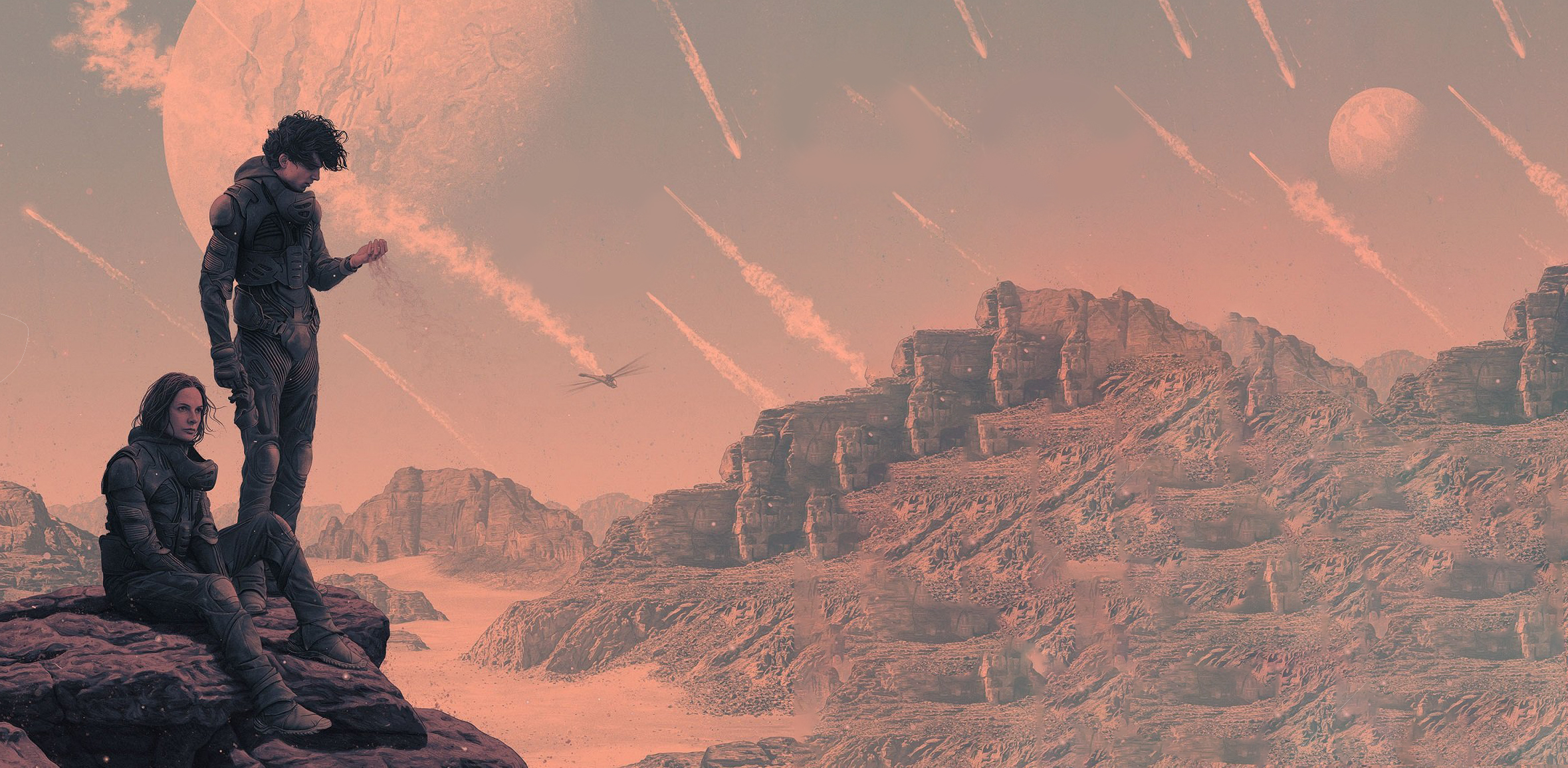
Hero Image
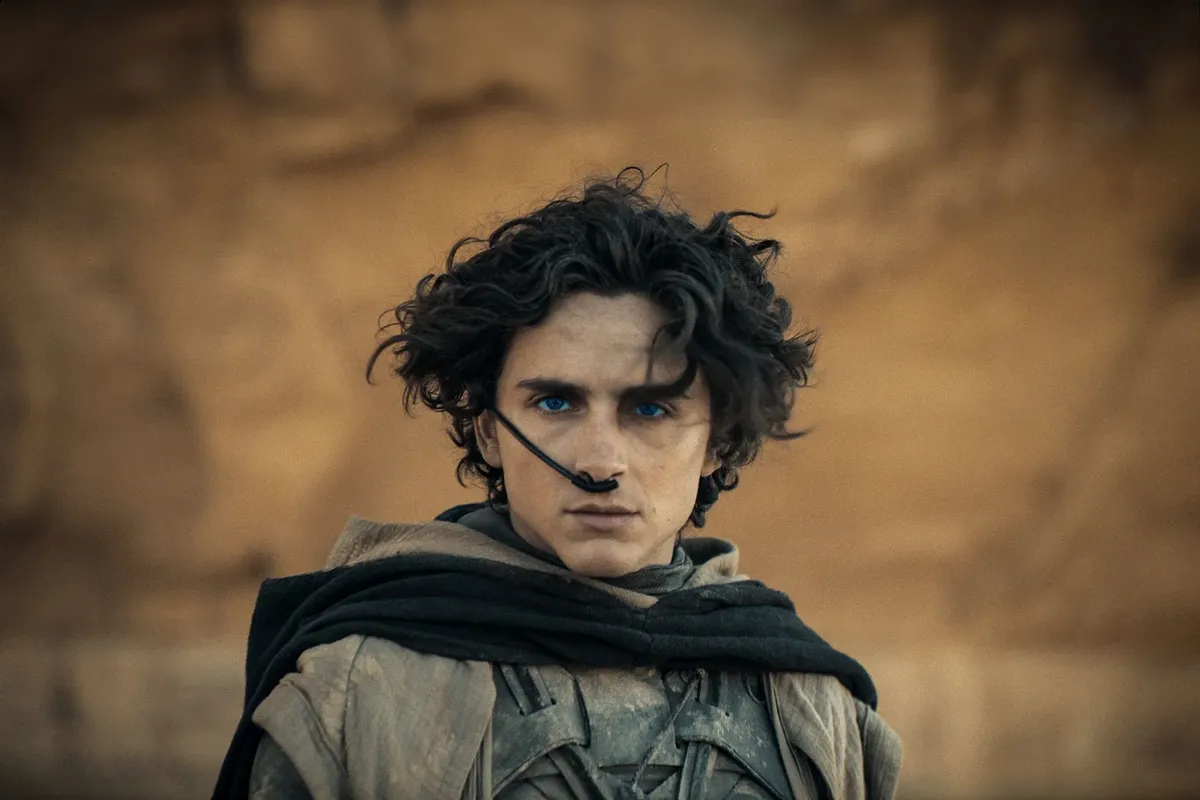
Paul Atreides

Paul Atreides

The son of Duke Leto Atreides and the Lady Jessica, Paul is the heir of House Atreides, an aristocratic family that rules the planet Caladan.

Jessica is a Bene Gesserit and an important key in the Bene Gesserit breeding program. According to the breeding program, she was to produce a daughter, who would be bred with Feyd-Rautha, a nephew of Baron Vladimir Harkonnen. However, Jessica falls in love with Leto and grants him the son he desires. Although Paul is a boy, Jessica gives him some training in the Bene Gesserit ways, including enhanced observation and the Sisterhood's specialized martial art. Initially described as "small for his age", Paul has secretly undergone the early Mentat training, and is also schooled in weapon use by Gurney Halleck and Duncan Idaho.

READ MORE CLOSE
Leto Atreides

Duke Leto Atreides

Duke Leto Atreides is the planetary governor of the ocean planet Caladan who takes over the lucrative spice mining operations on the desert planet Arrakis at the behest of the Padishah Emperor Shaddam IV.

Knowing it is some kind of trap but unable to refuse the assignment, Leto proactively seeks an alliance with the native Fremen, people tempered by the planet's harsh conditions who Leto realizes are an underestimated and untapped resource. He is accompanied to Arrakis by his Bene Gesserit concubine Lady Jessica, with whom he is in love but has not married to allow for the possibility of a politically advantageous marriage, and his son and heir, Paul. Threatened by Leto's growing influence among the Landsraad assembly of noble families, Shaddam has aligned himself with Leto's enemy, the Baron Harkonnen. The Harkonnens, secretly bolstered by Shaddam's fierce Sardaukar warriors and aided by Leto's own personal physician, the Suk doctor Wellington Yueh, launch an attack that devastates the Atreides forces. Leto is taken prisoner by the Baron, and dies attempting to kill him.

READ MORE CLOSE
Lady Jessica

Lady Jessica

As Dune begins, Jessica is the Bene Gesserit concubine to the Duke Leto Atreides, and mother to his young son and heir Paul. Leto has been granted control of the lucrative planetary fief of Arrakis, and is moving his entire household there from his ocean homeworld of Caladan.

Jessica's mentor and former instructor, the Bene Gesserit Reverend Mother Gaius Helen Mohiam, is still furious over Jessica's past insubordination—she had been instructed to bear only daughters but, out of love for Leto, she instead intentionally conceived Paul; Mohiam is somewhat intrigued by the potential she sees in the 15-year-old boy. Still, an Atreides daughter is a crucial part of the Bene Gesserit breeding program to eventually produce a super-being they call the Kwisatz Haderach.

READ MORE CLOSE
Gurney Hallack

Gurney Hallack

Halleck is Paul's weapons teacher, as well as a skilled musician. He is one of Leto's chief officers, and serves alongside Duncan Idaho as a Swordmaster of House Atreides.

According to Dune, Gurney was trained by "the best fighters in the universe", and alongside Idaho and Thufir Hawat gave Leto a war council almost unparalleled in the Imperium. He manages to survive the fall of House Atreides on Arrakis with 73 men. In the years after the attack, he falls in with the melange smugglers, eventually becoming a powerful figure. His smugglers fall for a Fremen trap—a fake hoard of spice—and are almost killed before Paul, now the Fremen leader "Muad'Dib", recognizes him. Halleck later becomes Jessica's loyal chief officer after nearly killing her, mistakenly believing she betrayed Duke Leto.

READ MORE CLOSE
Duncan Idaho

Duncan Idaho

At the time of Frank Herbert's original novel Dune (1965), Idaho is a Swordmaster of the Ginaz in the service of House Atreides and one of Duke Leto's right-hand men (with Gurney Halleck and Thufir Hawat).

When the Atreides take over the planet Arrakis at the order of the Padishah Emperor Shaddam IV, Idaho becomes Leto's ambassador to the Fremen, the desert people of Dune that Leto hopes will ally with him in the coming war against the Emperor and the Harkonnens.

Idaho goes to live with the Fremen, serving both Leto and Fremen leader Stilgar. When the Emperor's dreaded Sardaukar attack Arrakis in the guise of Harkonnen troops, Idaho initially survives the assault and saves Leto's son Paul Atreides and concubine Lady Jessica. When they are cornered at a Botanical Testing Station, Paul and Jessica flee while Idaho holds off the enemy, but he is ultimately killed.

READ MORE CLOSE
Baron Vladimir Harkonnen

Baron Vladimir Harkonnen

Commonly referred to as Baron Harkonnen, his title is officially Siridar (planetary governor) Baron. Vladimir Harkonnen is the direct-line male descendant of the Bashar Abulurd Harkonnen who was banished for cowardice after the Battle of Corrin.

The return of House Harkonnen to power generally is ascribed to adroit manipulation of the whale fur market and later consolidation with melange wealth from Arrakis. The character is usually described as the main antagonist of the novel. Herbert writes in Dune that the Baron possesses a "basso voice" and is so "grossly and immensely fat" that he requires anti-gravity devices known as suspensors to support his weight.He is one of the wealthiest members of the Landsraad and a bitter rival of Leto Atreides, and the Baron's "legendary evil and intellect" are unmatched by anyone else from House Harkonnen.

READ MORE CLOSE
Feyd-Rautha

Feyd-Rautha

Feyd, like Paul Atreides, is also the product of a centuries-long breeding program organized by the Bene Gesserit, who planned their own alliance by joining a Harkonnen son to an Atreides daughter with the expectation that their offspring would have a high probability of being their hoped-for Kwisatz Haderach.

For this reason, Lady Jessica's decision to defy the Sisterhood and to produce an Atreides son, Paul, threw the Bene Gesserit's plans into turmoil and established an irreconcilable tension between Feyd and Paul as the scions of their bitterly opposed noble houses. The risk of one or both of these young men being killed, destroying thousands of years of genetic engineering, is so great that the Bene Gesserit send an envoy, Margot Fenring, to seduce Feyd and conceive a child, salvaging his genetic material.

READ MORE CLOSE
Glossu 'Beast'
                                Rabban

Glossu "Beast" Rabban

Glossu "Beast" Rabban is the violent and brutish older nephew of Baron Harkonnen. He is as cruel and sadistic as his uncle, but lacks the Baron's intelligence.

The Baron tasks Rabban to rule the planet Arrakis for a time in the most brutal way possible, so that when his favored nephew Feyd-Rautha takes over, Feyd will be welcomed as a hero by the populace. After the Baron seizes the planet back from Atreides control, Rabban tells his uncle that the Harkonnens have woefully underestimated both the numbers and threat of the Fremen population there. Known as "the Beast Rabban" on Arrakis for his aggression and cruelty, his Fremen nickname is "Mudir Nahya", which translates as "Demon Ruler" or "King Cobra". Rabban is killed by the Fremen and the people of Arrakeen when Paul "Muad'Dib" Atreides retakes Arrakis using Fremen forces.

READ MORE CLOSE
Irulan Corrino

Irulan Corrino

Within the storyline, Irulan is established as the eldest daughter of the 81st Padishah Emperor Shaddam IV and Anirul, a Bene Gesserit of Hidden Rank. She has four younger sisters named Chalice, Wensicia, Josifa and Rugi, and no brothers.

Baron Vladimir Harkonnen notes that Irulan has eyes "that looked past and through him".In Dune Messiah, the Tleilaxu Face Dancer Scytale refers to Irulan as "a tall blonde beauty ... she carried herself with an aristocrat's hauteur, but something in the absorbed smoothness of her features betrayed the controls of her Bene Gesserit background".

Although Irulan is noted to have been "trained in the deepest of the Bene Gesserit ways, destined to be a Reverend Mother", in the series she never undergoes the dangerous ritual spice agony to achieve this. In Dune Messiah she is noted to have been "well trained for a task at which she had failed, a flawed Bene Gesserit creation". Of Irulan, Lady Jessica says in Children of Dune, "Irulan had never been the most accomplished adept in the Bene Gesserit—valuable more for the fact that she was a daughter of Shaddam IV than for any other reason; often too proud to exert herself in extending her capabilities."

READ MORE CLOSE
Leto Atreides

The Emperor

Shaddam IV of House Corrino is the Padishah Emperor of the Known Universe, whose power is secured by his armies of fierce Sardaukar warriors and control of the desert planet Arrakis, the only source of the all-important spice melange.

In Dune, Shaddam has granted Duke Leto Atreides control of the lucrative spice mining operations on Arrakis, previously managed by House Harkonnen, longtime enemies of the Atreides. Leto is aware that this assignment is some kind of trap, but is unable to refuse. Shaddam is threatened by Leto's growing influence among the Landsraad assembly of noble families, and uses the centuries-old feud between the Atreides and Harkonnens to disguise his moves against Leto. The forces of Baron Vladimir Harkonnen, secretly bolstered by Shaddam's Sardaukar and aided by a traitor in Leto's household, launch an attack that devastates the Atreides forces. Leto is killed, and his Bene Gesserit concubine Lady Jessica, and heir Paul, flee into the desert and are presumed dead in a sandstorm.

READ MORE CLOSE
Chani

Chani

In Dune, Paul's prescience begins manifesting itself through dreams while he is still living in his ancestral home on the planet Caladan; he sees Chani in these visions, though they have not yet met.

Paul and the Atreides come to the desert planet Arrakis, but Paul's father Duke Leto is soon killed by the Harkonnens and Paul and his mother Lady Jessica are forced to flee into the desert. They are reluctantly taken in by a tribe of the planet's native Fremen, and Chani is the Fremen woman put in charge of protecting and guiding Paul. They soon become lovers, and Paul rises as a religious leader among the Fremen, and is called Muad'Dib.

Already a talented warrior before meeting Paul, Chani becomes deadly after training by Paul and Jessica in the Bene Gesserit martial arts called the "weirding way" by the Fremen. Chani later manages to bring Paul out of the deep spice trance he falls into after using spice essence to enhance his powers. Paul and Chani's first child, Leto II (not to be confused with their later son, Leto II Atreides), is killed as an infant in a Corrino raid on their home in the deep desert.

READ MORE CLOSE
Stilgar

Stilgar

Stilgar is the Fremen leader, or naib, of Sietch Tabr. In Dune, Duke Leto Atreides sends his swordmaster, Duncan Idaho, to build a relationship with the mysterious native Fremen of Arrakis, people tempered by the planet's harsh conditions who Leto realizes are an underestimated and untapped resource.

Leto allows Duncan, impressed with the Fremen and their ways, a dual loyalty to both the Atreides and Stilgar. When Leto's son Paul and his Bene Gesserit mother, Lady Jessica, flee a Harkonnen attack, they find refuge with Stilgar's tribe of Fremen. Paul, believed to be their prophesied messiah, comes to be known as Muad'Dib and rises as a military and religious leader among the Fremen.

READ MORE CLOSE
Liet Kynes

Liet Kynes

Liet-Kynes is the Imperial Planetologist of the desert planet Arrakis, and the father of Chani by his Fremen wife, Faroula.

In Dune, Duke Leto Atreides meets with Kynes soon after arriving on Arrakis to take over the melange harvesting operations there. Escorted by the planet's native Fremen, Kynes is the liaison between them and the Imperials. Kynes takes personal note of Leto's son Paul, who seems to know Fremen ways intuitively, and shows signs of being a prophesied Fremen messiah. The Atreides later hear of a person or deity named "Liet" to whom all the Fremen communities give allegiance.

READ MORE CLOSE
Jamis

Jamis

Jamis is a formidable Fremen warrior from Sietch Tabr. In Dune, Paul Atriedes and his Bene Gesserit mother, Lady Jessica, flee a Harkonnen attack and find refuge with the Fremen of Sietch Tabr.

Newcomer Paul is immediately challenged by the distrustful Fremen warrior Jamis, and per Fremen custom they engage in a ritual fight to the death. Paul kills Jamis, and is subsequently obliged to take responsibility for his wife Harah and children.

READ MORE CLOSE
Hero Image